Thursday, January 15, 2015

2015 Oscar Snubs & Surprises

A quick note to my readers - First off, thanks so much for checking in regularly! Things are still crazy since I've returned from my semester abroad, and along with the holidays, I've been working, getting ready to go back to school, looking for summer jobs/internships, and of course, watching movies. So the good news is I'll have my reviews for Interstellar, Birdman, The Theory of Everything, The Imitation Game, Unbroken, and hopefully a few more in the coming weeks. Having said that, I thought I'd address a few snubs and surprises for this year's Oscars to let you all know that I'm still alive.
_____________________________________________
http://i.huffpost.com/gen/934921/thumbs/o-OSCARS-2013-facebook.jpg

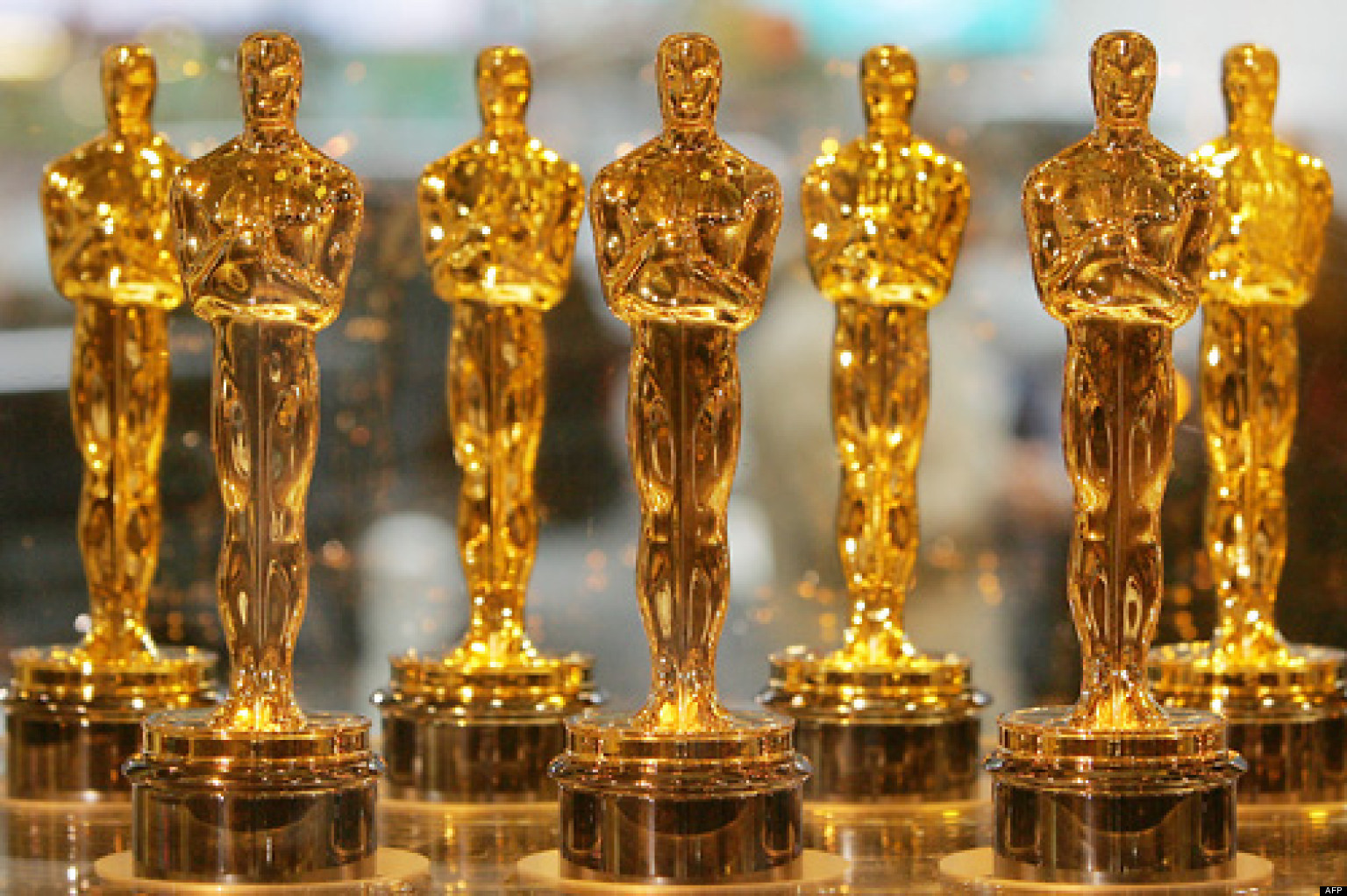
As usual, The Academy of Motion Picture Arts and Sciences dropped a few jaws in the unveiling of their annual nominations for film excellence. A few names people are throwing around, like Selma and Nightcrawler, are among the films I have not yet seen. So here are a few films that surprised me with nominations, along with a few films that I feel were snubbed for recognition.
http://cdn.collider.com/wp-content/uploads/into-the-woods-corden-blunt-huttlestone.jpg
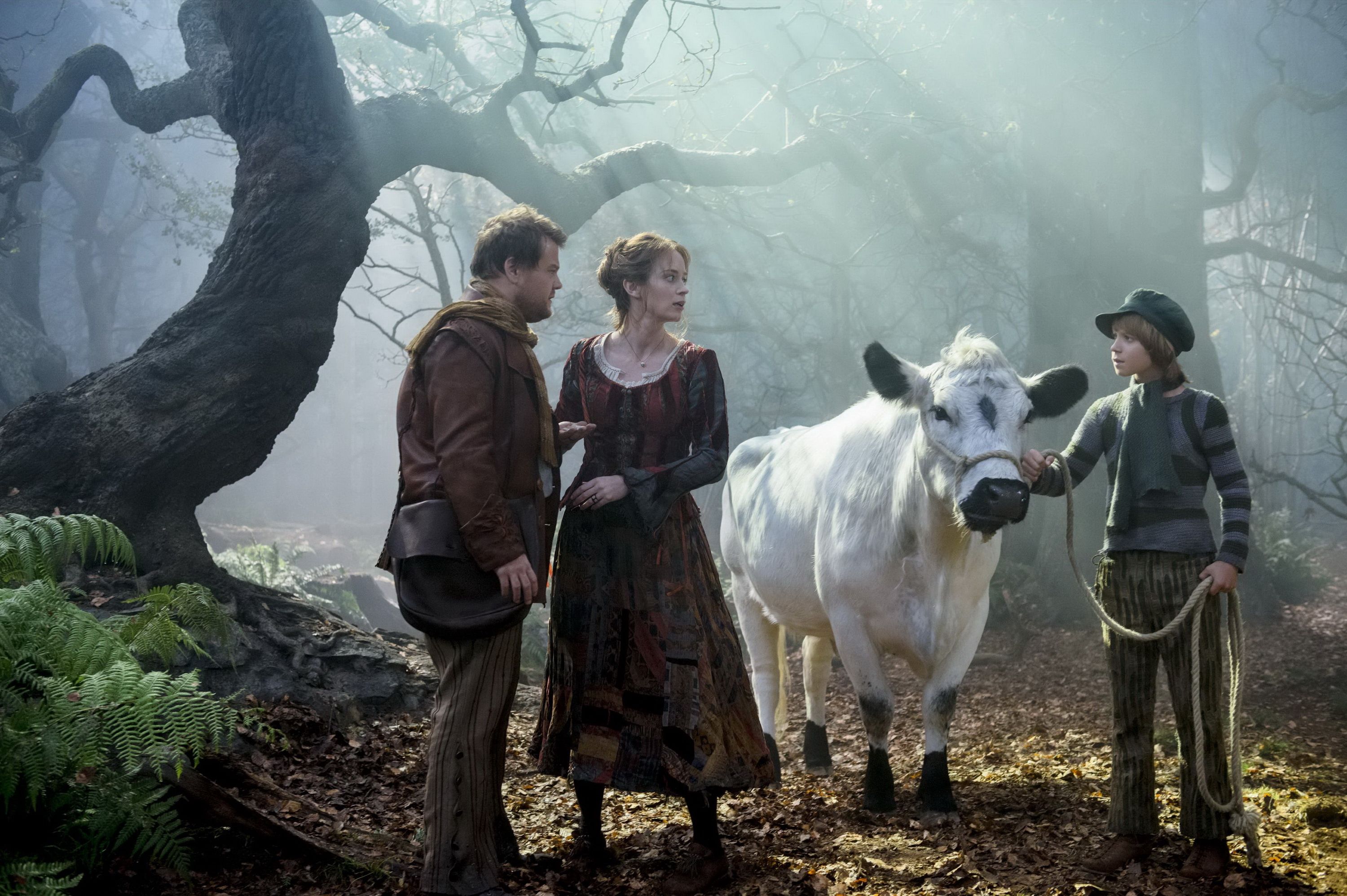
Snub: Into the Woods. Despite being the most magical and musical movie of the year, Into the Woods is left with nothing but a few worthy design nods and one for Meryl Streep's witch. The rest of its talented cast (especially Emily Blunt and Lilla Crawford), its director, the screenplay, and the film itself have been wrongly ignored.

Surprise: The Lego Movie. No, this is not a snub. This is good news! A bit of honesty - I haven't seen any of the other animated nominees (Dragon 2 is on my queue), though after watching The Lego Movie, I (along with my 9 & 12 year old cousins) was majorly unmoved, and I failed to see how the film was getting so much critical and popular success. Looks like the Academy may have agreed with me on this one!

http://modamadison.com/wp-content/uploads/2014/11/Picture2-2.jpg
Snub: Gone Girl. Despite shocking and captivating audiences, Gone Girl has been nominated only for Best Actress. I was harboring hope for both Ben Affleck and Neil Patrick Harris to be nominated, though neither were truly in the running. More likely were its nominations for Best Director or Best Picture, while its place on the Best Adapted Screenplay list was seemingly guaranteed. All three were unrealized, so instead of four or five nominations, Gone Girl only got one.

Snub: The Hobbit: The Battle of the Five Armies. The Hobbit had some of the most impressive technical features ever put on film. Aside from a sound nomination, the rest of its construction, from its visual effects, score, film editing, cinematography, and art design, was criminally overlooked.

Surprise: The Grand Budapest Hotel. After its Golden Globe win for Best Picture, nominations for Picture and Screenplay seemed like safe bets. But Grand Budapest secured nine nominations - that's a tie with Birdman for the most. The Grand Budapest Hotel was a good film - but fantastic enough to warrant nine Academy Award nominations?

Snub: Snowpiercer's Tilda Swinton. Honestly, I didn't get all the hype around summer's Snowpiercer. One thing that wasn't hyped enough about it, however, was Tilda Swinton's performance. Even though the BFCA found a spot for her name on their supporting actress shortlist, the Academy failed to reward Swinton's most engrossing, gut-wrenching, and transformative experience to date.

BlackFilm
Snub: The Equalizer's Marton Csokas. Okay - hear me out here. The Equalizer was nothing close to the year's best picture, but the film was bolstered by Csokas's performance as the ruthless and deadly Teddy. Descending into Teddy's meticulous madness, Csokas was deemed guilty by association with this so-so action movie.

Surprise: American Sniper. Most awards circuits didn't recognize Sniper with nominations of any sort. This morning, Sniper garnered six nominations, including Best Screenplay, Actor, and Picture. Don't count this war drama out of the running just yet.

Snub: Noah. With its all-star cast and breathtaking visuals, Noah was lauded by critics. Its chances for Best Picture were slim, but the score and technical construction should have been given more consideration.

Bocamag
Snub: The Fault in our Stars. 
Transcending the moapy chick flick genre, The Fault in Our Stars told an uplifting yet somber story about love, loss, and life. Ansel Elgort and Shailene Woodly gave two of the best performances of the year, yet their efforts were not acknowledged - a big mistake on the Academy's part if they wanted to bring in younger viewers. At the very least they could have thrown the filmmakers a bone with an Adapted Screenplay nomination.

Saturday, December 27, 2014

Into the Woods

Into the Woods is the best musical of the decade. I would say best of the century, but I hold 2007's Hairspray in too high of a regard to relinquish that honor. Based on the stage musical, Into the Woods creatively intertwines versions of classic fairytales Little Red Riding Hood, Jack and the Beanstalk, Repunzel, and Cinderella. The primary story is focused on a baker and his wife on a quest to lift a witch's curse on their home. 

What makes this musical stand out so much is its approach. Sure, it has many of the same morals as the animated Disney classics you grew up on, but Into the Woods perfectly meshes the classic and contemporary - offering stories of love, bravery, parenthood, and loyalty with the heart and laughs that no one in the 21st century can complain about. 

Director Rob Marshall brings out the best possible performances from his impeccably casted troupe of actors. Ranging from the young to the old, every member of Into the Woods's cast delivers a performance that balances passion and professionalism in a manner that I have not so often seen. Daniel Huttlestone (one of the only good aspects of 2012's Les Mis) and Lilla Crawford play Jack and Red Riding Hood with skill beyond their years. There's a strong level of confidence that exudes from Crawford, while Huttlestone has outdone himself in yet another musical, securing his place in a legacy of motion picture sing-a-longs for years to come.

And let's not forget about the veteran performers. Meryl Streep, though underused, shines as The Witch, and while I don't see it as warranted, looks pretty solid to posit her 19th Academy Award nomination. Personally, I'd like to see a nod for Anna Kendrick's lovely performance as Cinderella, or Emily Blunt, who as The Baker's Wife does her best work since The Devil Wears Prada. Though any of the cast, including Streep, or even Chris Pine as The Prince, would be fully deserving of any award or nomination received. Their comedic timing is fully on point, and so not only is this the best musical of the year, but also the best comedy. Among these features, the film is bolstered by astounding art direction and cinematography.

Into the Woods is complete magical fun from the very first minute to the very last, offering a complete immersion into its music-filled fantastical universe. Despite being a PG-rated Disney musical, Into the Woods truly is for everyone - not just little kids and girls. Put away your pride, boys. There's nothin' wrong with a couple of bros going to watch a great movie musical, especially when it's as hilarious and well-made as this one.

Rating: 5/5

Birdman

Collider

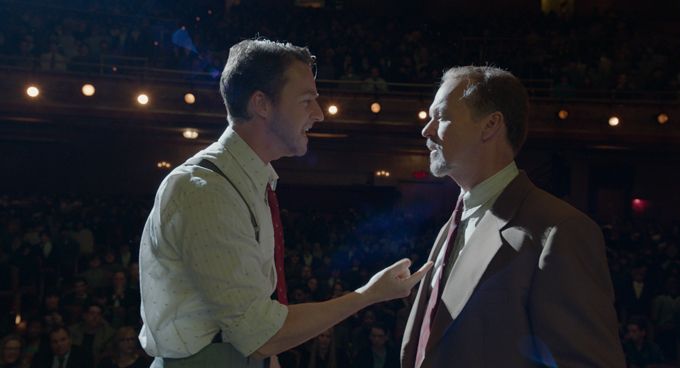
Michael Keaton is back, Edward Norton is better than ever, and Emma Stone can now be considered a serious actress by everyone who doubted her prowess. In Birdman, Alejandro González Iñárritu brings out some of the best performances of the year with his ingeniously subtle screenplay and his dedicated style of directing. His script follows around Hollywood actor Riggan Thomson, a forgotten star of yesterday, who is trying to re-launch himself into the public eye. Riggan attempts to adapt, direct, produce, and star in a Broadway adaptation, but struggles with family, affairs, critics, and a shadow of his former self - all of which are trying to squash his dreams of emerging out of a terribly inconvenient midlife crisis.

Riggan Thomsen is relentless. He won't stop. He yells at his daughter because he loves her. He drops equipment on the head of one of his actors because he wants the role to be played by someone better. He punches that actor's replacement in the face because he wants to keep him in line. He run through Manhattan in his underwear because he refuses to see his play fail. He begs a critic to give him a fair shake because he doesn't just want this comeback - he needs it.

Birdman is about reality. Even though its characters may be drug addicts, 80s celebrities, angry cynical critics, and alcoholic method actors, its characters carry an intriguing sense of relatability. Their struggles and their pains, though not always mirroring those of our own lives, are human. I don't know about you, but I had no idea what it was like to be a depressed former celebrity with an ex-wife, a mistress with a pregnancy-scare, and a daughter who's no stranger to rehab. But thanks to Birdman, I do now, because the movie never forgets to remind the audience that it is simply a view into Riggan's quest for redemption, and that's something almost everyone can relate to. 

Iñárritu plunges his audience into Riggan's world. His characters are expertly constructed - we simultaneously root for and loathe Riggan, while we eagerly await the return of Edward Norton's Mike every time the camera pans away from him. Iñárritu had a vision for making this movie more than just a great screenplay, and with the skills of cinematographer Emmanuel Lubezki, Birdman's impact jumped from marvelous to historical. Following the cast throughout rooms, hallways, buildings, and massively mobbed city streets, the camerawork of Birdman is formatted in a way of making the viewer think the film is shot in one continuous take, and so when the cuts occur, you don't even notice it (which makes me wonder where this movie's Best Film Editing nomination is). Lubezki, winner of last year's Best Cinematography Oscar for Gravity, is in a pretty good position to get a second consecutive win. Equal credit goes out to the actors for not only going along with the experimental style, but embracing it. 

I'll try to avoid labels in my wrap-up, as I don't think Riggan would appreciate them too much were he a real person. Birdman is both inventive and revolutionary. Few movies dare to reach for the ambition that Birdman achieved, and even less will live up to that expectation with the bar of originality, cinematography, and bluntness that the film has set. Although it drags at times, Birdman is an accomplishment on various levels of filmmaking, and earns its recognition.

Rating: 4.5/5

Tuesday, December 16, 2014

The Hobbit: The Battle of the Five Armies

Moviepilot

Finally, we have the Hobbit movie that we have been yearning for, that we have been waiting for, and most importantly, that we deserve. After an iffy first installment and a better (yet still imperfect) middle chapter, The Battle of the Five Armies delivers on the promise of an impressive source material and production crew, giving us not only the best Hobbit movie, but also one of the best movies of the year.

The movie begins as abruptly as the previous one ended, showing us the destruction of Laketown at the hands (well, wings) of the dragon Smaug. After Bard the Bowman manages bring the beast to his demise, the refugees venture to the Misty Mountains for shelter and resources. Meanwhile, Thorin and his company of dwarves are sitting pretty in their hideaway full of gold.

Even though the men of Laketown played a part in helping Thorin claim his birthright, he tells Bard that he will not share his riches. Soon, tensions start to rise in Middle Earth. The dwarves build up their defenses and send for reinforcements while the survivors from Laketown form an alliance with elves to claim what they believe is rightfully theirs. At the same time, two separate armies of orcs march to the mountains to kill anyone who stands in their way. The hobbit Bilbo tries desperately to avoid war, but is unsuccessful as The Battle of the Five Armies ensues.

Technically speaking, The Hobbit: The Battle of the Five Armies is one of the most impressive films ever made. Its style and execution of art direction, visual effects, cinematography, musical score, film editing, and sound mixing during the prolonged battle sequence was sheer perfection. I sat in awe and watched the masterpiece that the brilliant moviemakers had constructed for my viewing. It is my sincere hope that The Academy will recognize the movie for at least one of these cinematic aspects with an Oscar nomination or win. My trust in Jackson was restored with this film - it had the careful balance of countless characters and storylines with jaw-dropping action, drama, and the return of his smartly-implemented comic relief.

My complaints for this movie are minimal, though very similar to its predecessors. It's a shame we never got to know all the dwarves as individuals, but thankfully, all the other characters resonated like they never have before on the big screen. When Bilbo returns to The Shire, the wrap-up is more quick than I had hoped. In other words - too much "there," not enough "back again" (although there is a nice bridge from this Middle Earth saga to the next). The ending left a few storylines unresolved, most notably the madness-inducing Arkenstone's legacy and the enormous treasure that the tens of thousands of soldiers were fighting over. Who claimed which part of the riches? Unfortunately those who didn't read the book may never know.

Like the other two Hobbit movies, this film's story suffers a bit due to its unnecessary split. It is more than made up for, however, by its visual magnificence and the cast and crew's marvelous dedication to producing the most entertaining movie of 2014. The escalation in quality from the first movie to the last is remarkable. For one last time, Jackson has amazed me yet again with another near-perfect Middle Earth movie. The story is now complete, but thanks to this movie, it won't ever be forgotten.

Rating: 4.5/5

Interstellar

https://grist.files.wordpress.com/2014/11/interstellar3.jpg?w=660&h=371

To say that we, as moviegoers, were "expecting more" from Christopher Nolan in his latest film, is something that I believe is inaccurate. A more fair statement would be, perhaps, that we were expecting better, or perhaps, less. After over a decade of making films that didn't need to showboat every aspect, Interstellar went overboard. So how can we say that we "expected more" from Christopher Nolan's Interstellar when, in fact, it gave us "more" than we've ever had in a Christopher Nolan movie?

Let's look at his filmography. Nolan made a name for himself with screenplay-based thrillers like Memento and The Prestige. We loved the subtlety and pacing of Batman Begins and the suspenseful intensity of The Dark Knight, yet audiences seemed to be less enthusiastic towards The Dark Knight Rises. Why? Because the build-up was too long, and the excitement, although more explosive, wasn't as satisfying as in its predecessors.

Now, this brings us to Interstellar. In conversations about this movie, you'll hardly hear anyone complaining about the film's message about the power and scope of a human's capacity to love, its visuals, and even its sheer ambition. Yet Interstellar is being viewed as one of, or even as, Christopher Nolan's least impressive film. That's not to say that Interstellar is a bad movie. When you have Christopher Nolan directing Matthew McConaughey, Anne Hathaway, Jessica Chastain, and Michael Caine (in space!), it really can't go too wrong. But somehow, Interstellar just never felt completely right.

Interstellar starts off with a graspable yet unique storyline. Decades from now, the world has destroyed its ability to sustain itself. Fearing for the future of humanity, NASA is running covert missions, sending teams to distant galaxies to explore the chances of finding a new home. When single father and former pilot Cooper (Matthew McCon-alright-alright-alright-aughay) inexplicably finds his way to NASA's secret headquarters, the man in charge (Michael Caine) sees it as a sign to send him on the next shuttle. Cooper's departure is understood by his eldest son but breaks the heart of his daughter Murph. After he takes off, Cooper and his team (Anne Hathaway and Wes Bentley, performing with their expected depth) spend years looking for a new Earth. Here's where things should've gotten interesting, but instead, it's where the movie took a turn for the worse.

To quote a member of YouTube's ScreenJunkies team (check them out if you don't know who they are, they're perfect), Interstellar takes its intriguing premise and becomes "a movie about a girl whose dad flies into a black hole, and through the power of love, travels back in time to his daughter's bedroom to haunt an old wristwatch so that it taps out the secrets of the universe in morse code."

I completely respect ambition in filmmaking, so long as it pays off in the long run, but Interstellar didn't pay off the way I was expecting. What really hindered my complete, unabashed praise for the movie was a terribly-edited montage sequence that failed at its efforts to balance four different story lines, spanning lightyears away and trying to simultaneously keep our attention on a grown woman in her childhood bedroom, three astronauts panicking, an angry farmer trying to save his burning crops, and Matt Damon trying to dock a spaceship. All of the other problems people had with these movie would've just been imperfections in my eyes, but following that horrendously constructed scene, all of those little problems, including the film failing to pay off on its build-up, added insult to injury.

Now that I've given Interstellar its deserved bashing, let's revisit why you should see this movie, because you should. Two things I've mentioned in this review are ambition and Christopher Nolan. No one will argue Interstallar is not ambitious, and for the places the movie goes, from the human heart to the farthest galaxy, the movie demands to be viewed.

I think it's fair to say that following this movie, the phrase "Christopher Nolan can do no wrong" would be a falsity, yet "Christopher Nolan is a brilliant filmmaker" would still hold true. Interstellar deserves praise for its themes, effects, music, performances, and set design; all of which truly will take your breath away time and time again. I just hope that one day, we can look back at Interstellar as a tiny blemish on the record of Christopher Nolan's work and not the beginning of the end.

Rating: 3.5/5

Monday, November 24, 2014

The Hunger Games: Mockingjay - Part 1

Variety

A year ago, in my review for Catching Fire, I told you not to get your hopes up too high for this movie. Well, this doesn't happen too often, but here it goes - I was wrong, and I admit it. As expected, the installment about political propaganda commercials in a cinematic franchise about kids killing each other is clearly less exciting in comparison to its previous installments, but working with the source material, Mockingjay - Part 1 represents a significant step up in quality compared to the book, and has me eager for what Part 2 will bring. But unfortunately, we have to wait a year for that. Thanks, Hollywood.

Following her escape from the Quarter Quell arena, Katniss Everdeen finds herself a pawn in the rebellion against the Capitol. Located beneath the bombed surface of District 13, the home base of the rebellion features several returning characters, like Katniss' (more-than-a?) friend Gale, a sobered-up (but still gleefully sarcastic) Haymitch Abernathy, determined ex-gamemaker Plutarch Heavensbee, a wig-less Effie, and resentful Capitol darling Finnick Odair. New characters include District 13 President Alma Coin (brought to life with a confident performance by Julianne Moore), Commander Boggs, and a camera crew led by a team of Capitol refugees joining the cause.

Noticeably absent are former Hunger Games winners Peeta Mellark and Johanna Mason, who were unable to be saved by the District 13 army during the fall of the arena, and along with Finnick's girlfriend Annie, were taken captive by the Capitol. After the revolution begins, and riots throughout all of Panem's districts start, the Capitol brainwashes Peeta into speaking to calm down the rebels. Katniss sees through the charade and demands Peeta's rescue in exchange for serving as the poster child of the rebellion.

In the absence of child-on-child violence, the film shifts focus on the rebellion's efforts to use Katniss to ignite a fire in the districts. After agreeing to be a living embodiment of the Mockingjay, Katniss, her camera crew, and bodyguards Boggs and Gale travel around Panem to film propaganda videos and unite the districts. This leads to a few actions scenes, involving land mines, suicide bombings, and exploding hovercrafts. Despite their infrequency, these scenes were almost perfectly timed and executed, and while not as enthralling as the arena, they sufficiently kept the film afloat by showing the more visually exciting moments of the rebellion.

Much is to be said about the pacing of the film. When you take away the excitement of the arena from the weakest entry of the Hunger Games series, then split that story in half to make two separate films, I wholeheartedly expected the film to be a comparative letdown. And while virtually no case can be made against the statement that both of Mockingjay's prequels are better movies, it's commendable that director Francis Lawrence and screenwriters Danny Strong and Peter Craig were able to balance action sequences with pivotal character moments and necessary storytelling so effectively. Not once could I say I was bored, although to be fair, I wasn't able to say I was as entertained as I was during either of the first two films.

One aspect that wasn't explored as much as I expected (or wanted) was the Peeta-Katiss-Gale love triangle. This will definitely be looked into more in the final entry, but while there were certainly sparks in the districts, there weren't that many between Katniss and Gale, which seriously had me doubting my #TeamGale stance. And another thing - I definitely could've gotten on with more screen time for Effie and Haymitch, who, thanks to portrayers Banks and Harrelson, are able to bring comic relief to an otherwise serious franchise so effortlessly.

Although the content of this movie varies from its predecessors, it has at least one thing in common with them - it was too short. As a result of its split into two parts, Mockingjay - Part 1 felt very much like an incomplete story. I firmly believe this split was non-essential, and while they were able to take their time, develop a respectable pace, and explore the characters thoroughly, I do think it could have been done just as well in one single, two-and-a-half hour movie. Maybe my opinion will be different after I see Part 2 (if you recall, I was wrong the last time I wrote a review of a Hunger Games film), but just a reminder, the last Lord of the Rings movie wasn't split into two parts, and it won Best Picture.

Rating: 3.5/5

Monday, October 20, 2014

'71

A mild disclaimer before I start this review: '71 is not yet playing in theaters outside of the UK…so take that for what it is. Anyways, on to the review of the movie you probably won't ever see!

IndieWire

From what I saw in this movie, 1971 wasn't the best time to join the army. Gary Hook (Jack O'Connell, star of the upcoming Unbroken) apparently had a different idea, and enlists during the time of the ultimate Protestant/Catholic religious turmoil in Northern Ireland. After his troop's deployment from Great Britain, Gary becomes separated from his brothers in arms when a riot in the center of Belfast goes violently awry. With most of the city eager to put a bullet in his head, Gary struggles to survive the night and find an ally who can help get him back to his barracks.

'71's action sequences can be frustrating, to say the least. While the film jumps right into action after ten minutes or so, and the realistic bombardment of violence more than captivates, it's hard to keep focus on the deadly haywire when the filmmakers decide to go for a shaky cam approach. It may have been done to add the appropriate sense of urgency, but I paid for a ticket to '71, not Cloverfield. The approach didn't work for The Hunger Games, and it didn't help much here either.

On top of that, I've always found action sequences to be more gripping when we care about the characters who might be dying during them. '71 sacrificed sufficient character establishment in order to throw us right into the action, and while this did make it stand out from other films of its kind, I never really got the answers I was looking for regarding the players. All we really know about Gary is that he's from Great Britain and has a younger brother, and aside from that, his life's story is anybody's guess. Oh, and the other characters? Forget about their back stories and motivations as well. "Who are the two red-headed guys? And are they good or bad?" I guess I'll never know the detailed answers to those questions. (Side note: the accents were very strong in this movie, and the dialogue was a bit mumbly. Had I watched this at home with subtitles, the character's decisions and words might've been a bit clearer).

Still, much is to be said about the originality the film took in its approach. When the camera holds steady, you'll see that '71 has some of the most jaw-droppingly graphic war scenes since Black Hawk Down, which usually show up abruptly and hold nothing back. What really makes the film worthy of your time is its underlying messages about violence and war relating to children.

Gary is probably around 18 or 19, and so when a Belfast citizen intervenes when a group of town members are savagely beating him and his comrade, proclaiming that they're young enough to be the attackers' own sons, that was my first clue. But from the moment the camera takes us to Belfast, we see kids around the age of six or seven leaning over a fence, cursing, yelling, and throwing things at our heroes. One kid steals a machine gun, while another who is out far past his bedtime drinks from a pint in the bar and loses both his arms in an explosion that almost takes his life, all because he wanted to be apart of what was going on around him. We are also exposed to another character, Shaun (probably in his early teens), who is seen abandoning his family's home to help find and kill Gary. Immediately following this, we see his sister stop drawing a flower with her colored pencil, and get up from the table she was using. The camera waits just long enough to see the pencil fall off the table, and if that's not a direct message about the literal fall of innocence during times of war, I must be reading the movie all wrong.

With its messages, atmosphere, and (usually) visionary action scenes, '71 stands out in the large canon of pre-existing war films. While the characters and cinematography were a letdown, the film's authenticity was enough to save it.

Rating: 4/5