Wednesday, January 21, 2015

The Imitation Game

Hollywood Reporter

The Imitation Game works as a deep and exciting historical thriller, but it doesn't work nearly as well in regards to the other places it tries to go. The film, taking place in England during the depths of World War II, follows a team of geniuses trying to decipher a Nazi code. The code, referred to as "Enigma," is responsible for the Germans' orchestration of elaborate attacks against the Allies. Fearing his team will never be able to crack the code, British Commander Denniston (Tywin Lan… I mean Charles Dance) hires Alan Turing (Benedict Cumberbatch) to change the game for the good guys.

Turing is strange. He's quirky, reserved, awkward, but brilliantly innovative and determined. Kind of like a more tame Sheldon Cooper, but with the same amount of sass. When he gains the approval of Denniston, he has half his team fired and replaces them with Joan Clarke (Keira Knightley, in an undeserved yet overdue second Oscar-nominated performance). Clarke, Turing, and the rest of the decryption team work tirelessly over several months to crack the code, knowing full well every day that goes by without success is a day that the Germans reset their code, causing their day's work to be wasted. But when there are hundreds of millions of possibilities of what the code could be, Turing knows they can only do so much until their inevitable demise. So he invents the world's first computer to even the playing field.

The film tries to grapple with a lot of topics - Turning's past, Turing's future, Turing's homosexuality, social issues, self-confidence, and more - but it only fully succeeds in tackling the tension at the time and the difficult dynamic between Turing and his colleagues and superiors. In short, the movie is successful at what it tries to be in its overarching approach - a cinematic thriller. The film bites off more than it can chew in its runtime, and while it's entertaining, immersive, and at times pulse-pounding, therese diversions are nothing but a distraction to the overall impact of the film when its so often unclearly jumps between timelines and shifts focus.

Was the film supposed to be something more than a thriller? It didn't come off as a biopic - the film took on too many subject for that to be the case. Was it supposed to be a commentary on gay rights? While that idea was present, it didn't come across that strong until the end of the film, at which point it felt extremely out of place. But even though the film as a whole was hampered by these incomplete attempts to address many subjects, its approach in doing so didn't completely rob the film of its praiseworthy areas. The thrills are still real and the acting - particularly by Benedict Cumberbatch in the lead - is spot-on.

Many were hailing The Imitation Game as the best British film of the year, yet the BAFTAs handed the award to The Theory of Everything (a choice I personally agree with). That doesn't mean that The Imitation Game should be overlooked, though. It may not thrive in every direction it tries to go, but the effort is present, and for the most part, the film does work.

Rating: 3.5/5

The Theory of Everything

http://theotherjournal.com/filmwell/files/2014/11/x900.jpg

 The sad thing is that before The Theory of Everything most people didn't really know Stephen Hawking. They knew the man in the wheelchair, sure, but they didn't really know the man who was sitting in that chair. The Theory of Everything takes one of the greatest minds in history back to the days of his emerging manhood, only to face the ultimate hindrance to success just as he begins to change the world's perception of science in the grand scheme of the universe. Fortunately, he also encounters the very thing that enables his perseverance and success in life.

Hawking is seen throughout his uneven years, and is played by Eddie Redmayne in a landmark performance. Spanning from his humble days sporting over-sized eyeglasses as a Cambridge University student to achieving world recognition for his scientific theories, we see Hawking's life from the very highest to the most broken - both physically and emotionally.

While much of the film is dedicated to Hawking's scientific undertaking, the primary focus is on the relationship between him and his wife, Jane (Felicity Jones). Jane's a literary student at Cambridge pursuing her own doctorate when the two fall head over heel for one another (no pun intended). During their initial courting, Jane hears news of Stephen's diagnosis of motor neuron disease - an ailment slated to take his life withing two years. Jane declares she wants to be with Stephen for however long they have together, and the two marry. Jane tries to balance the role of wife, mother, scholar, and caretaker as Stephen defies all odds - living decades past his terminal diagnosis. For a kind of companionship that she cannot find in Stephen, Jane kindles a questionably close friendship with fellow church choir singer Jonathan.

I typically associate biopics with being moving, powerful, or inspirational. I typically don't include "enjoyable" in that list, but during the early parts of the movie, it is enjoyable (later evolving into moving, powerful, etc.). Even though we know that Stephen and Jane's relationship will see a lot more hard times than easy on the screen, we can't help but feel that same level of blind and infatuated hopefulness for the film. The movie works, but tragically, Hawking doesn't get off that easy. He perseveres through a cane, to crutches, to a wheelchair, losing his ability to lift, walk, speak, and write, but never lets the adversities in his own life stop him or his mind from changing the world.

The film is one of whimsy and heartbreak. It is able to make us feel the entire range of emotions that Stephen and Jane felt over the decades of their time together in just two hours of screentime. This is mainly due to Redmayne's presence. In a most patient performance, where he relies entirely on body language for the final third of the movie, he magnificently excels on screen as he portrays Hawking as a charmer and a burden; a lover and an inconvenience; a visionary and a human. Carefully directed by James Marsh, The Theory of Everything is a beautiful adaptation of Jane Hawking's autobiography - a book that Anthony McCarten was able to adapt so perfectly for the big screen. A biopic worth watching (and loving), The Theory of Everything occasionally requires a bit too much patience from the viewer, but supplies them with a wonderfully grand and worthwhile payoff.

Rating: 4.5/5

Foxcatcher

NYTimes

A few weeks ago, I went to a talk by Boston Globe film critic Ty Burr, who, in regards to the Academy nominating director Bennett Miller (but not the film for Best Picture), said something along the lines of "this is the Academy's way of saying 'Selma and American Sniper were movies that apparently directed themselves…Bennett Miller directed a movie that wasn't worth directing.'" As crazy  as it sounds, this actually makes sense. The film was experimental, and although not always successful, was engrossing. While watching the film, it's as if a lot is going on, but at the same time, nothing is. But even though not a lot of it was  explicitly on screen. That was a gutsy move by Miller, and it paid off. I guess that's the approach that he felt he had to take if he wanted to stretch this out to a two hour narrative film as opposed to a 45-minute true crime documentary on the History Channel.

There's a strange feel to Foxcatcher.  There are moments where we see nothing but Channing Tatum's character eating breakfast, or lingering shots of men running. But Foxcatcher, the story of two Olympic wrestlers working with a mysterious investor and coach, is a film of implication, and not so much plot. It's interesting, to say the least, and frankly a bit head-scratching when you realize how well it works.

In the movie, Olympic gold medalist Mark Schultz (Channing Tatum) is recruited by millionaire John E. du Pont (Steve Carell, in a career-changing performance) to lead a wrestling team to a bid for the 1988 Olympics. Desperate to bring America to a state of hope and victory through the sport, du Pont invites both Mark and his brother Dave (Mark Ruffalo), also an Olympic champ, to stay at his family's Foxcatcher estate. While Mark is enthused at both the financial and professional possibilities, as well as personal affirmation, Dave declines the offer, despite fervent pleads from both his brother and du Pont. Without the watchful eye of his older brother, Mark gets scarily close to du Pont, whose behavior scarily becomes erratic.

It's clear that the film (which spends nearly two hours switching between scenes of wrestling footage, tender moments between the Schultz brothers, and du Pont being a creep) exists only for its climactic scene. If you don't already know what it is, I won't ruin it for you, but it's a bit unexpected, and after seeing the way it was pulled off, makes me feel the film is being wrongly marketed as a true crime movie. From the eyes of someone who doesn't know this certain information before the viewing, I can only imagine that the film comes off as two hours of nothing and then an insane twist. Part of me does think that if I did not know how Foxcatcher ended, I may not have liked it.

I wish I were a professional movie critic, because when you say "in my professional opinion, I'm not quite sure what to make of this film," it sounds a lot more legitimate than "I'm not quite sure what to make of this film." At the very least, I can say that Foxcatcher has immersive performances, a unique approach, redemptive qualities, commentary of family dynamics, and a gritty feel to its focus on real-life human descent. I can't say that I "enjoyed" Foxcatcher, but I respect its ambition, and I admire it.

Rating: 4/5

Unbroken

NYPost


I remember when I first saw the trailer for Unbroken. I was sitting in the theater, and I kid you not, I got chills while watching it. Just the idea of this epic story was already making me feel inspired. Well, just as they say don't judge a book by its cover, you shouldn't judge a movie by its trailer. Unbroken was a good movie, but as a viewer, it was frustrating to watch this movie knowing it could have been far more powerful by giving full justice to its source material.

Unbroken is the true story of Louis Zamperini (Jack O'Connell), a son of Italian immigrants who ran for the United States Olympic Team and later fought in their war. We see Louis grow up a headstrong troublemaker. At the insistence of his older brother, Louis turns his life into something meaningful when he focuses his efforts on distance running - a skill he develops through high school that eventually takes him to the Olympics. Despite starting off in the back end of his race, he impresses the announcers and spectators by making a huge comeback in the last lap - and even though he knew he wouldn't win, he decided he could've pushed himself a bit further. 

After his athletic success, Louis joins the Air Force during the height of World War II, and while flying over foreign waters, his plane crashes and most supplies are lost. Louis, along with the only other two survivors, are forced to spend a month and a half on a raft while trying to avoid capsizing, dehydration, starvation, shark attacks, Japanese fighter pilots, and worst of all, the feeling of hopelessness. The soldiers soon discover that their suffering is far from over when they are captured by the enemy and placed in separate prisoner of war camps. Louis is left alone a captive in a strange land while being beaten and tormented by the camp's overseer, The Bird. All the while, Louis yearns to go home, but never compromises his country, his spirit, or his integrity in that mission.

At times, Unbroken isn't nearly as good a movie as it pretends to be as, but other times, it's a lot better than it's playing off to be. It's hard to pinpoint exactly where the movie went wrong. My guess would be that director Angelina Jolie felt the film could carry itself with the epic inspiration of the real-ife story. Unfortunately, that story didn't convey that same atmosphere to the viewer, no matter how much Jolie had hoped. Jolie's lack of effort comes across far too often. Most of the time, Unbroken manages to overcome Jolie's unremarkable direction, but the film itself can't wholly shake that feeling away.

If anything, Louis Zamperini's story is one that should be seen on screen, and it wouldn't be right to dismiss the man's existence or the film itself just because Angelina Jolie isn't a great director. Everything else in the film - the score, the film editing, the art, and the cinematography - are all able to pick the film up in some of its lower areas, and because the story is told well enough, I do recommend it. Unbroken had so much potential, but sadly, not all of it was fully realized.

Rating: 3/5

Thursday, January 15, 2015

2015 Oscar Snubs & Surprises

A quick note to my readers - First off, thanks so much for checking in regularly! Things are still crazy since I've returned from my semester abroad, and along with the holidays, I've been working, getting ready to go back to school, looking for summer jobs/internships, and of course, watching movies. So the good news is I'll have my reviews for Interstellar, Birdman, The Theory of Everything, The Imitation Game, Unbroken, and hopefully a few more in the coming weeks. Having said that, I thought I'd address a few snubs and surprises for this year's Oscars to let you all know that I'm still alive.
_____________________________________________

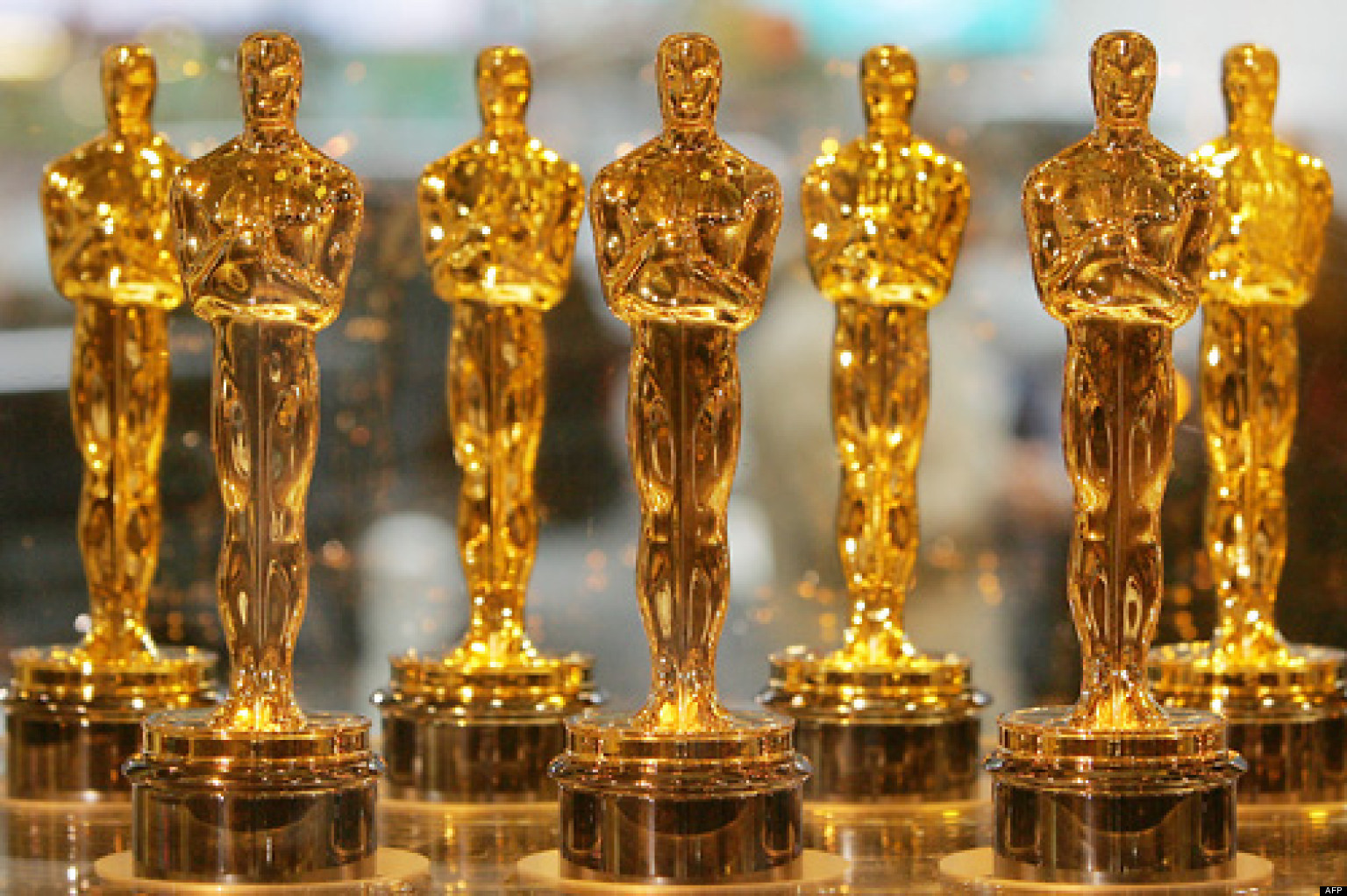
http://i.huffpost.com/gen/934921/thumbs/o-OSCARS-2013-facebook.jpg

As usual, The Academy of Motion Picture Arts and Sciences dropped a few jaws in the unveiling of their annual nominations for film excellence. A few names people are throwing around, like Selma and Nightcrawler, are among the films I have not yet seen. So here are a few films that surprised me with nominations, along with a few films that I feel were snubbed for recognition.

http://cdn.collider.com/wp-content/uploads/into-the-woods-corden-blunt-huttlestone.jpg
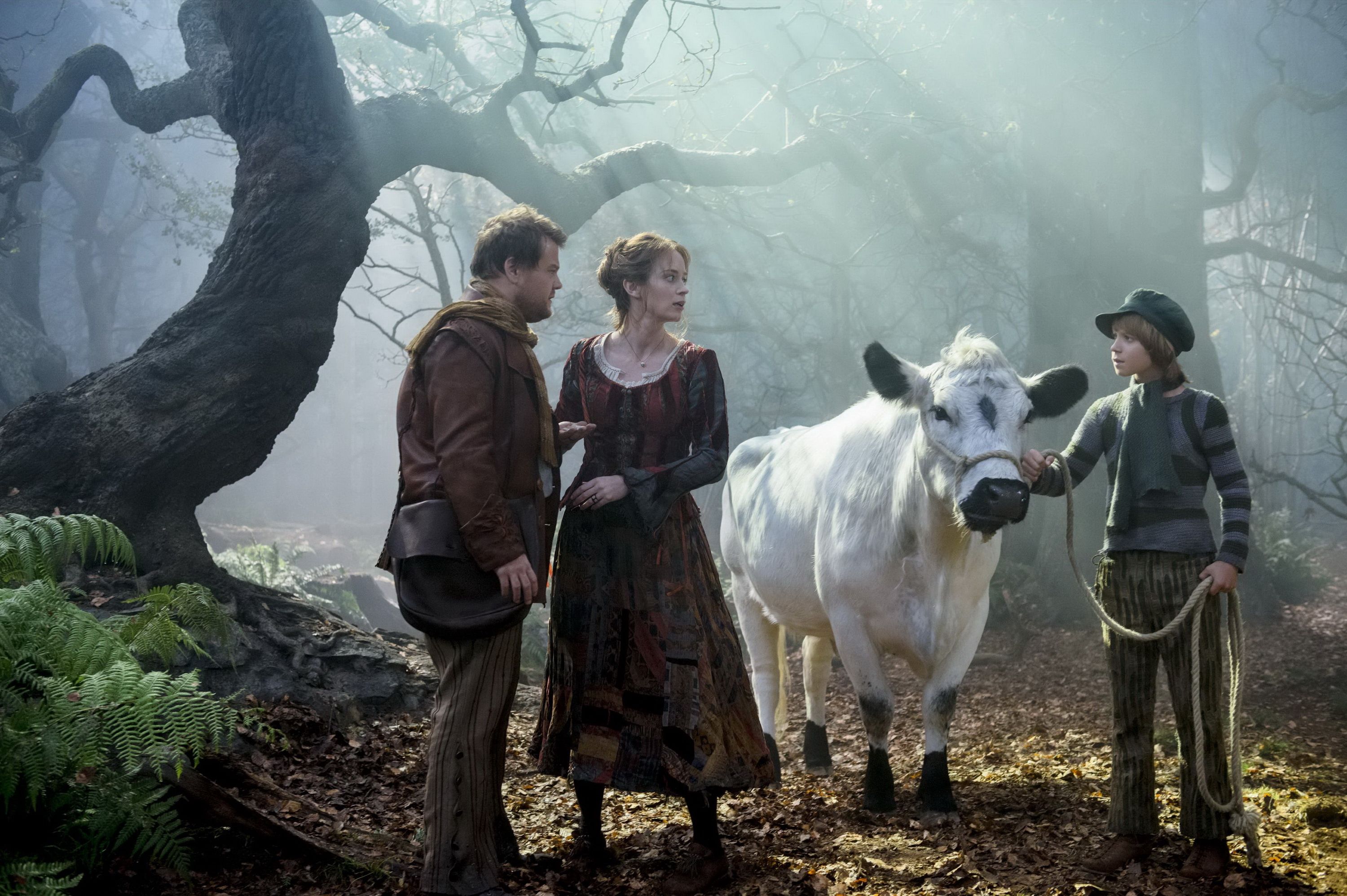
Snub: Into the Woods. Despite being the most magical and musical movie of the year, Into the Woods is left with nothing but a few worthy design nods and one for Meryl Streep's witch. The rest of its talented cast (especially Emily Blunt and Lilla Crawford), its director, the screenplay, and the film itself have been wrongly ignored.

Surprise: The Lego Movie. No, this is not a snub. This is good news! A bit of honesty - I haven't seen any of the other animated nominees (Dragon 2 is on my queue), though after watching The Lego Movie, I (along with my 9 & 12 year old cousins) was majorly unmoved, and I failed to see how the film was getting so much critical and popular success. Looks like the Academy may have agreed with me on this one!

http://modamadison.com/wp-content/uploads/2014/11/Picture2-2.jpg
Snub: Gone Girl. Despite shocking and captivating audiences, Gone Girl has been nominated only for Best Actress. I was harboring hope for both Ben Affleck and Neil Patrick Harris to be nominated, though neither were truly in the running. More likely were its nominations for Best Director or Best Picture, while its place on the Best Adapted Screenplay list was seemingly guaranteed. All three were unrealized, so instead of four or five nominations, Gone Girl only got one.

Snub: The Hobbit: The Battle of the Five Armies. The Hobbit had some of the most impressive technical features ever put on film. Aside from a sound nomination, the rest of its construction, from its visual effects, score, film editing, cinematography, and art design, was criminally overlooked.

Surprise: The Grand Budapest Hotel. After its Golden Globe win for Best Picture, nominations for Picture and Screenplay seemed like safe bets. But Grand Budapest secured nine nominations - that's a tie with Birdman for the most. The Grand Budapest Hotel was a good film - but fantastic enough to warrant nine Academy Award nominations?

Snub: Snowpiercer's Tilda Swinton. Honestly, I didn't get all the hype around summer's Snowpiercer. One thing that wasn't hyped enough about it, however, was Tilda Swinton's performance. Even though the BFCA found a spot for her name on their supporting actress shortlist, the Academy failed to reward Swinton's most engrossing, gut-wrenching, and transformative experience to date.

BlackFilm
Snub: The Equalizer's Marton Csokas. Okay - hear me out here. The Equalizer was nothing close to the year's best picture, but the film was bolstered by Csokas's performance as the ruthless and deadly Teddy. Descending into Teddy's meticulous madness, Csokas was deemed guilty by association with this so-so action movie.

Surprise: American Sniper. Most awards circuits didn't recognize Sniper with nominations of any sort. This morning, Sniper garnered six nominations, including Best Screenplay, Actor, and Picture. Don't count this war drama out of the running just yet.

Snub: Noah. With its all-star cast and breathtaking visuals, Noah was lauded by critics. Its chances for Best Picture were slim, but the score and technical construction should have been given more consideration.

Bocamag
Snub: The Fault in our Stars. 
Transcending the moapy chick flick genre, The Fault in Our Stars told an uplifting yet somber story about love, loss, and life. Ansel Elgort and Shailene Woodly gave two of the best performances of the year, yet their efforts were not acknowledged - a big mistake on the Academy's part if they wanted to bring in younger viewers. At the very least they could have thrown the filmmakers a bone with an Adapted Screenplay nomination.

Saturday, December 27, 2014

Into the Woods

Into the Woods is the best musical of the decade. I would say best of the century, but I hold 2007's Hairspray in too high of a regard to relinquish that honor. Based on the stage musical, Into the Woods creatively intertwines versions of classic fairytales Little Red Riding Hood, Jack and the Beanstalk, Repunzel, and Cinderella. The primary story is focused on a baker and his wife on a quest to lift a witch's curse on their home. 

What makes this musical stand out so much is its approach. Sure, it has many of the same morals as the animated Disney classics you grew up on, but Into the Woods perfectly meshes the classic and contemporary - offering stories of love, bravery, parenthood, and loyalty with the heart and laughs that no one in the 21st century can complain about. 

Director Rob Marshall brings out the best possible performances from his impeccably casted troupe of actors. Ranging from the young to the old, every member of Into the Woods's cast delivers a performance that balances passion and professionalism in a manner that I have not so often seen. Daniel Huttlestone (one of the only good aspects of 2012's Les Mis) and Lilla Crawford play Jack and Red Riding Hood with skill beyond their years. There's a strong level of confidence that exudes from Crawford, while Huttlestone has outdone himself in yet another musical, securing his place in a legacy of motion picture sing-a-longs for years to come.

And let's not forget about the veteran performers. Meryl Streep, though underused, shines as The Witch, and while I don't see it as warranted, looks pretty solid to posit her 19th Academy Award nomination. Personally, I'd like to see a nod for Anna Kendrick's lovely performance as Cinderella, or Emily Blunt, who as The Baker's Wife does her best work since The Devil Wears Prada. Though any of the cast, including Streep, or even Chris Pine as The Prince, would be fully deserving of any award or nomination received. Their comedic timing is fully on point, and so not only is this the best musical of the year, but also the best comedy. Among these features, the film is bolstered by astounding art direction and cinematography.

Into the Woods is complete magical fun from the very first minute to the very last, offering a complete immersion into its music-filled fantastical universe. Despite being a PG-rated Disney musical, Into the Woods truly is for everyone - not just little kids and girls. Put away your pride, boys. There's nothin' wrong with a couple of bros going to watch a great movie musical, especially when it's as hilarious and well-made as this one.

Rating: 5/5

Birdman

Collider

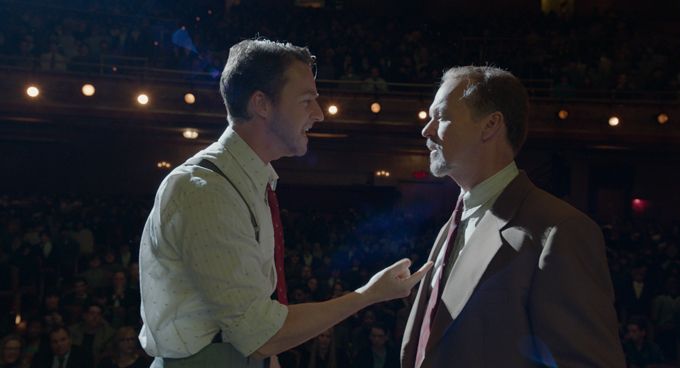
Michael Keaton is back, Edward Norton is better than ever, and Emma Stone can now be considered a serious actress by everyone who doubted her prowess. In Birdman, Alejandro González Iñárritu brings out some of the best performances of the year with his ingeniously subtle screenplay and his dedicated style of directing. His script follows around Hollywood actor Riggan Thomson, a forgotten star of yesterday, who is trying to re-launch himself into the public eye. Riggan attempts to adapt, direct, produce, and star in a Broadway adaptation, but struggles with family, affairs, critics, and a shadow of his former self - all of which are trying to squash his dreams of emerging out of a terribly inconvenient midlife crisis.

Riggan Thomsen is relentless. He won't stop. He yells at his daughter because he loves her. He drops equipment on the head of one of his actors because he wants the role to be played by someone better. He punches that actor's replacement in the face because he wants to keep him in line. He run through Manhattan in his underwear because he refuses to see his play fail. He begs a critic to give him a fair shake because he doesn't just want this comeback - he needs it.

Birdman is about reality. Even though its characters may be drug addicts, 80s celebrities, angry cynical critics, and alcoholic method actors, its characters carry an intriguing sense of relatability. Their struggles and their pains, though not always mirroring those of our own lives, are human. I don't know about you, but I had no idea what it was like to be a depressed former celebrity with an ex-wife, a mistress with a pregnancy-scare, and a daughter who's no stranger to rehab. But thanks to Birdman, I do now, because the movie never forgets to remind the audience that it is simply a view into Riggan's quest for redemption, and that's something almost everyone can relate to. 

Iñárritu plunges his audience into Riggan's world. His characters are expertly constructed - we simultaneously root for and loathe Riggan, while we eagerly await the return of Edward Norton's Mike every time the camera pans away from him. Iñárritu had a vision for making this movie more than just a great screenplay, and with the skills of cinematographer Emmanuel Lubezki, Birdman's impact jumped from marvelous to historical. Following the cast throughout rooms, hallways, buildings, and massively mobbed city streets, the camerawork of Birdman is formatted in a way of making the viewer think the film is shot in one continuous take, and so when the cuts occur, you don't even notice it (which makes me wonder where this movie's Best Film Editing nomination is). Lubezki, winner of last year's Best Cinematography Oscar for Gravity, is in a pretty good position to get a second consecutive win. Equal credit goes out to the actors for not only going along with the experimental style, but embracing it. 

I'll try to avoid labels in my wrap-up, as I don't think Riggan would appreciate them too much were he a real person. Birdman is both inventive and revolutionary. Few movies dare to reach for the ambition that Birdman achieved, and even less will live up to that expectation with the bar of originality, cinematography, and bluntness that the film has set. Although it drags at times, Birdman is an accomplishment on various levels of filmmaking, and earns its recognition.

Rating: 4.5/5