Sunday, January 25, 2015

AJ's Top 10 of 2014

Yes, I'm aware we're almost a month into the new year. Blame movie companies for distributing movies via platform rollout techniques and delaying wide release until January. Anyways, I slacked a bit at my theater attendance last year but still managed to see some phenomenal pieces of cinema. There were highly original films like Boyhood and Birdman, some entertaining sci-fi and fantasy features like MockingjayX-Men, and Planet of the Apes, and some very moving biopics like The Theory of Everything and Selma. Speaking bluntly, this was probably one of my least favorite years for movies in a long time. Nonetheless, these ten movies were achievements in various aspects of filmmaking, and in my opinion, were the best movies of 2014.


Honorable Mention: Earth to Echo

When wielded wisely, nostalgia can be quite a powerful tool in moviemaking, and Earth to Echo's atmosphere made me feel a sense of reminiscence towards a time that I'm still living in. Earth to Echo is one of the most enjoyable family-friendly movies I have ever seen. Its approach had me excited, laughing, and hooked from the very beginning.


#10: Gone Girl

Functioning as both a captivating mystery and a brilliantly twisted psychological thriller, Gone Girl is an absorbing motion picture, featuring Ben Affleck at his best, equally matched by the performances of Neil Patrick Harris and Rosamund Pike, as the trio bring the characters from Gillian Flynn's novel to the life.



Someone I met last year told me that liking a movie like The Fault in Our Stars goes against my manhood, and it was one of the most shallow things I've ever heard. The Fault in Our Stars is among the most carefully made, well-acted, and life-affirming romances. Teens and adults, men and women alike, will agree - The Fault in Our Stars proves that movies made for teen audiences adapted from young adult novels can be of the highest cinematic quality.


#8: Birdman

Who would've guessed following around a washed-up actor trying to make his comeback could be one of the year's best films? Well, thanks to shining performances from Michael Keaton and Edward Norton, the writing and directing by Iñárritu, and a bit of groundbreaking cinematography and film editing (what an Oscar snub that was!), Birdman soared.
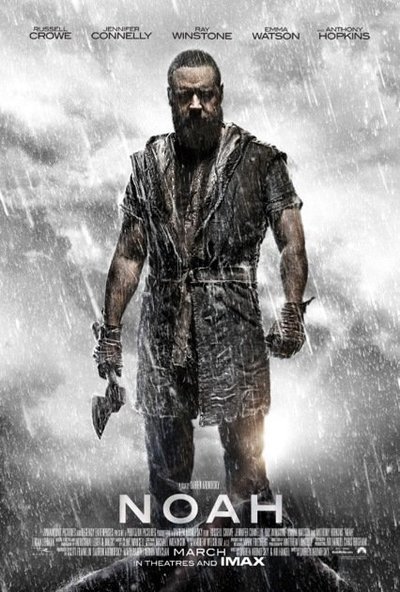


#7: Noah

It's a shame that Noah fell off the radar as awards season progressed. Its all-star cast, visuals, and daringly post-modern approach were its keys to financial and critical success, and it has cemented its place among the best Biblical adaptations in film history. Not only does it hone in on the story of the Great Flood, but it also has a signature of 21st century filmmaking. Noah deserves to be remembered.
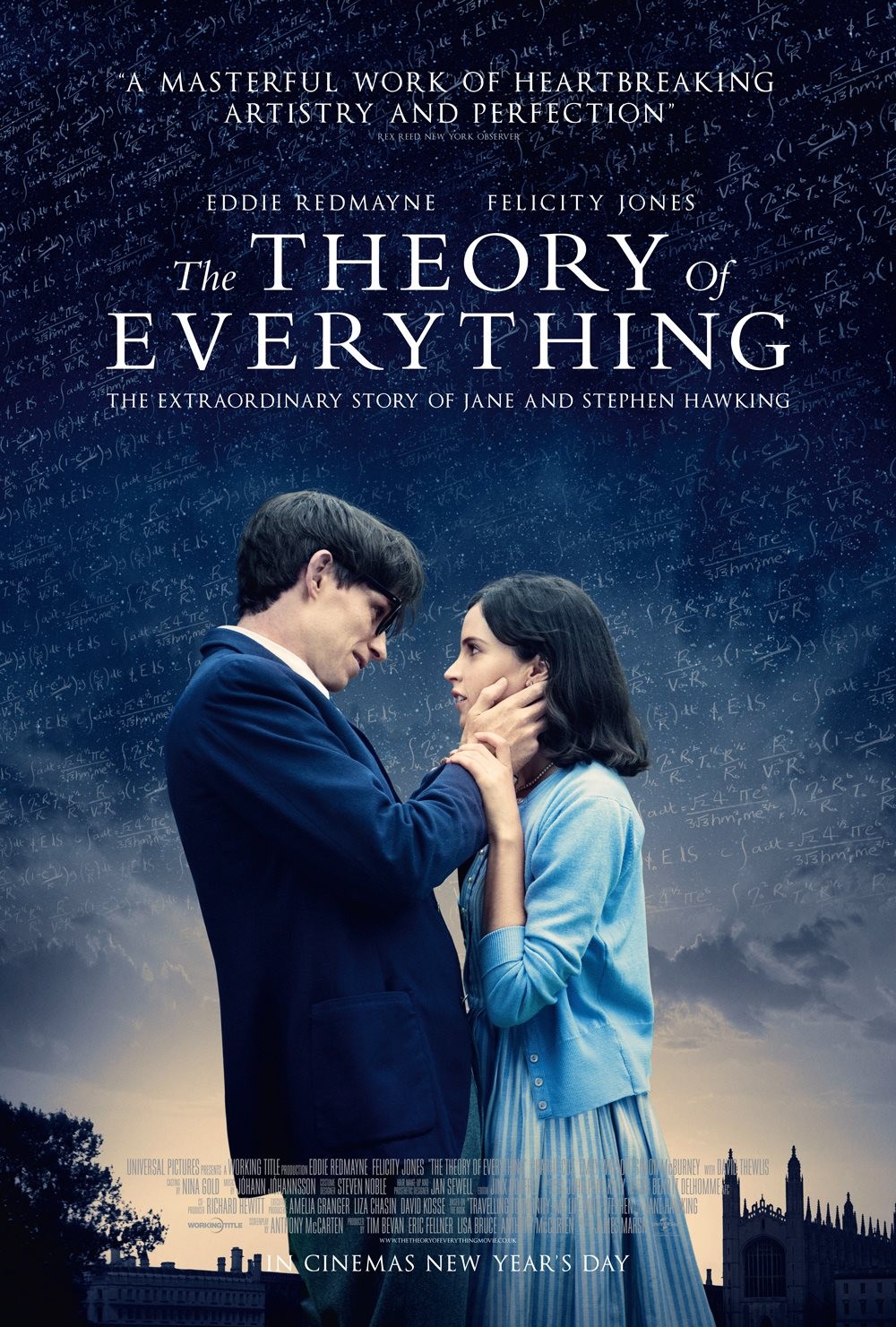


It's official - I'm an Eddie Redmayne fan. His ability to portray Stephen Hawking from his fullest to his lowest, and all the gradual dilapidation in between, was impeccable. But don't just see it for the performances - see it for its ability to bring this amazing man's life so beautifully to the big screen. 
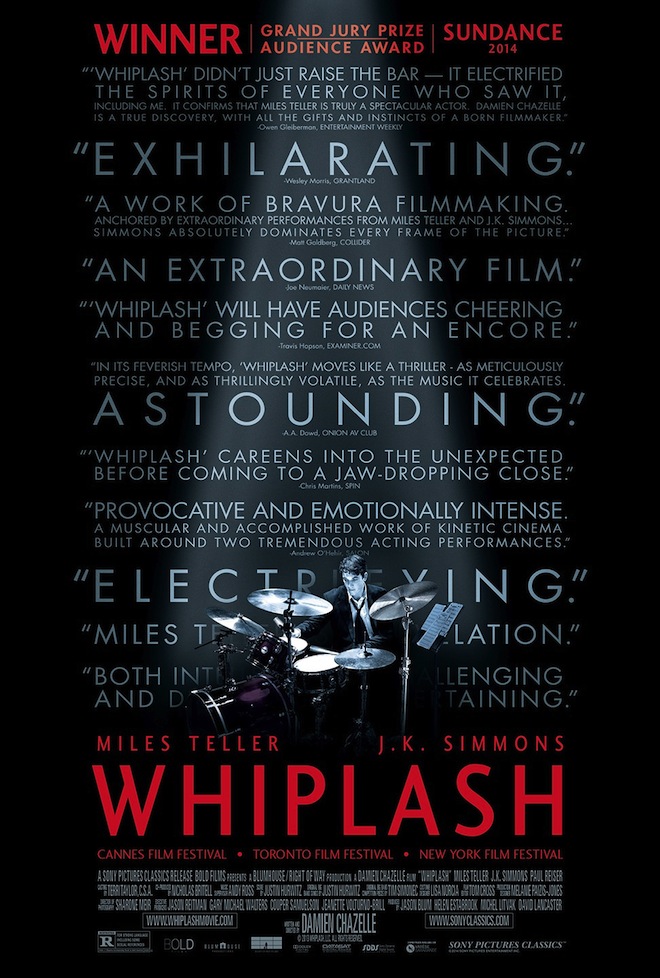


#5: Whiplash

It's so great to see young filmmakers being recognized for their work. I'll admit it - had it not been for the Academy Award nominations I may never have seen this film. But even with its indie production value, Whiplash has the feel of a mainstream thriller. It's an extremely exciting film that, like its star-making performances from J.K. Simmons and Miles Teller, came out of nowhere to become one of 2014's greatest achievements. 
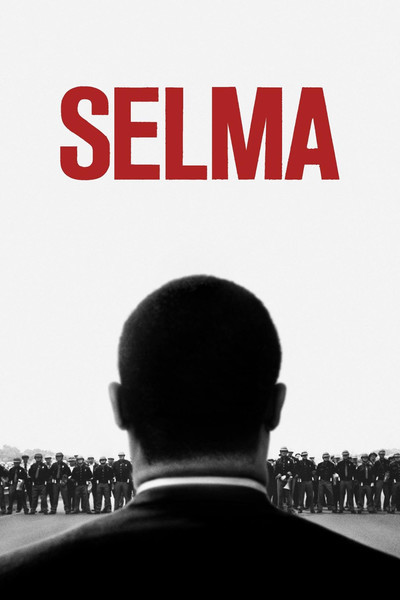


#4: Selma

I was waiting to publish my Top 10 until I saw this, and boy did I make the right choice. Magnificently directed and fiercely powerful, Selma is an unbelievably moving portrayal of a flawed and brave man following his dreams to better the world. Frankly, I don't care about any political or controversial concerns surrounding the approach to this movie - it is a crowning success of filmmaking. 


I'm not sure how else to say this, so I'll say it again - The Hobbit is one of the most technically impressive films ever made. As we say goodbye to Middle Earth one last time (supposedly), the production crew spared no expense in delivering an exhilarating final chapter to this trilogy. The Battle of the Five Armies is utterly breathtaking, and made the whole journey worthwhile.


I'll make the case that Into the Woods was the best musical, best comedy, has the best ensemble cast, and was the most fun movie to watch in the theater this year. Enjoyable for everyone and with a fair amount of worthwhile messages, Into the Woods builds on a sweeping magical story with a meticulously designed set, never failing to capture you into its mystical world.


#1: Boyhood

Okay, I know this is the third year in a row I've placed a coming-of-age film at the top of my year's best list. But even though Boyhood started out as an idea for a coming-of-age film, it evolved into so much more. It's a portrait of existence, a window to the past, and a reflection on the frequency and subtlety of our ever-changing lives. Boyhood was a labor of love - a love of childhood, a love of innocence, a love of filmmaking, a love of life. 

Selma

EW

There's no manipulation, no ulterior motives, no imposition of white guilt, and no sense of Oscar bait in Selma. The movie succeeds because it was an emotional, technical, and trailblazing feat in the history of cinema. It is being hailed as a masterpiece simply because it is one. It's being praised because it deserves praise. And people are saying the film was snubbed at the Oscars because it absolutely was snubbed. Its direction, screenplay, score, and film editing all raise Selma to the heights of being one of the best films of 2014

Selma shows just a snippet of the tumultuous life and time of Dr. Martin Luther King, Jr. After he is awarded the Nobel Peace Prize, he turns to the executive power of President Lyndon B. Johnson for assistance in striking down the prejudiced voting restrictions in the 1960s South. With the President ignoring the pressing issues of violence, racism, and murder by the corrupt cops and officials in Alabama, King and his comrades decide to take matters into their own hands by raising the stakes of immediacy in the public's eye.

King orchestrates a march of protestors - black & white; men & women; Christian, Jew, & otherwise - from the unflinchingly racist city of Selma, Alabama to Montgomery. Amidst the hardship the marchers and supporters face, opposers of the march - including Alabama's governor and even President Johnson himself - are forced to re-evaluate the impact of their indifference.

We see King in an environment that the average citizen isn't familiar with. There's no epic re-enactment of the "I Have a Dream" speech, nor is there a scene depicting the assassination of the civil rights leader. The assassinations we see are those on the street, inside church, or in restaurants, making the deaths more unexpected and real. What we see of King encompasses his days in the height of his troubles, his interactions with acquaintances and enemies, and how he handles his role as a father, a husband, a friend, and a leader. To include the more well-known facts of his life in the movie would have been unjust to this film. Those aspects would have made Selma a superficial biopic that displayed King as a figurehead and an unchallenged hero. With Selma's approach, we see King as a man, and more importantly, as a martyr. Because of this approach, Selma's screenplay is a true work of art. Writer Paul Webb's labors are obvious, and his efforts pay off.

The film is wonderfully directed by Ava DuVernay, who before Selma was predominantly concerned with making documentary features. I can't image the film having a more fitting director than DuVernay - a woman who is was so clearly able to convey her passion for both filmmaking and equality through this magnificent movie. Her vision for Selma is fully realized and benefits from a fine performance by David Oyelowo as the historical man behind the movement. 

Selma is fiercely powerful, with a patient approach, raw emotion, and spectacular performances to keep the film engrained in your memory. How and why this film was overlooked at the Oscars evades me, but I cannot stress enough that, in my opinion, it was a wrongful overlook. I implore you to see Selma, even if the Academy, for whatever reasons, may not agree with me as strongly on that statement. 

Rating: 5/5

Wednesday, January 21, 2015

Whiplash

Coming Soon!

American Sniper

NYDailyNews

American Sniper is not a war movie. Just in the sense that The Theory of Everything is not a science movie and Foxcatcher is not a wrestling movie; it is a biopic. It's true that American Sniper takes place during a war, its protagonist is involved with a war, some scenes are war-centric, and one of its themes is the effects of war on its participants; but inherently, all the movie really serves as is a view into Chris Kyle's life - what he did, why he did it, who he did it for, and how his actions and the events surrounding his life defined him.

Chris Kyle (Bradley Cooper) grew up as a God-fearing, 'Murica-loving Texan. Not a redneck, though. He even clarifies to his future wife Taya (Sienna Miller) at their first encounter that "Texans ride their trucks, and rednecks ride their cousins." But he also tells her that he'd be willing to lay down his life for what he believes is the greatest country on Earth as a Navy SEAL. Cooper more than earns his third Oscar nomination in this role - capturing the range of Kyle's patriotism, emotion, charm, and reluctant fame as a result of his actions overseas. Sienna Miller, wrongfully overlooked by the Academy, serves as the embodiment of what troops like Kyle are fighting for, and more importantly, what they're either coming home to or leaving behind.

The movie deals with war, yes. Specifically, we follow Kyle during his arduous training and his four post-9/11 tours in Iraq. Some scenes work, some don't, and this is where the distinction between war film and biopic becomes so important. Director Clint Eastwood manages to keep Kyle at the center of the war scenes most of the time. Even when we see an Iraqi family being slaughtered by an Al-Quaeda militant while a fierce sniper secures the area, we see the scene through Kyle's eyes because it's shot from his emotional perspective. Other scenes, particularly in his later tours, focus more on bringing battles between Americans and Iraqis (or as they're referred to in the movie, "savages"), and because the focus gradually moves from Kyle's perspective to a general militant's, the action doesn't seem to mean as much. When the scenes are done right, however, the movie brings some of the most intense on-screen war moments since 2001's Black Hawk Down. 

Rapidly adding up his kill-list, Kyle's comrades nickname him "The Legend." He confidently declares that he's "willing to meet his creator and answer to every shot he took" back home, but after every shot we see Kyle make the camera holds back a bit, and shows us as Cooper grasps the reality of what Chris Kyle did for a living. We see the regretful nodding away from the scope and hear the sighs after his bullet stops a beating heart. He resents what he does, but he's proud to do it - and Cooper makes that heartbreaking realization all the more powerful to the viewer.

In between his tours, we see glimpses of Kyle as a husband and father of two as he unsuccessfully deals with his post-traumatic stress. Unsurprisingly, his behavior disturbs his wife Taya, who suggests he seek help at the local VA. Insistent that he's fine, his response is always to re-deploy, even though Taya warns him that one of these times, he might not have anything to return to.

My problem with this movie is not with its approach to being a biopic, because in that aspect, it's an emotionally-charged and moving piece on a damaged American hero. My problem is that the film sometimes strays away from that hero, trying instead to bring our focus on some action sequences that aren't always effective, as well as an ending that wraps up as unfortunately and abruptly as Chris Kyle's story itself. In a year of stunning biopics like The Theory of Everything and Selma, American Sniper doesn't completely stand out against its comparative competition, but offers a well-constructed adaptation of a life that everyone will want to know about, and that all Americans should know about.

Rating: 4/5

The Imitation Game

Hollywood Reporter

The Imitation Game works as a deep and exciting historical thriller, but it doesn't work nearly as well in regards to the other places it tries to go. The film, taking place in England during the depths of World War II, follows a team of geniuses trying to decipher a Nazi code. The code, referred to as "Enigma," is responsible for the Germans' orchestration of elaborate attacks against the Allies. Fearing his team will never be able to crack the code, British Commander Denniston (Tywin Lan… I mean Charles Dance) hires Alan Turing (Benedict Cumberbatch) to change the game for the good guys.

Turing is strange. He's quirky, reserved, awkward, but brilliantly innovative and determined. Kind of like a more tame Sheldon Cooper, but with the same amount of sass. When he gains the approval of Denniston, he has half his team fired and replaces them with Joan Clarke (Keira Knightley, in an undeserved yet overdue second Oscar-nominated performance). Clarke, Turing, and the rest of the decryption team work tirelessly over several months to crack the code, knowing full well every day that goes by without success is a day that the Germans reset their code, causing their day's work to be wasted. But when there are hundreds of millions of possibilities of what the code could be, Turing knows they can only do so much until their inevitable demise. So he invents the world's first computer to even the playing field.

The film tries to grapple with a lot of topics - Turning's past, Turing's future, Turing's homosexuality, social issues, self-confidence, and more - but it only fully succeeds in tackling the tension at the time and the difficult dynamic between Turing and his colleagues and superiors. In short, the movie is successful at what it tries to be in its overarching approach - a cinematic thriller. The film bites off more than it can chew in its runtime, and while it's entertaining, immersive, and at times pulse-pounding, therese diversions are nothing but a distraction to the overall impact of the film when its so often unclearly jumps between timelines and shifts focus.

Was the film supposed to be something more than a thriller? It didn't come off as a biopic - the film took on too many subject for that to be the case. Was it supposed to be a commentary on gay rights? While that idea was present, it didn't come across that strong until the end of the film, at which point it felt extremely out of place. But even though the film as a whole was hampered by these incomplete attempts to address many subjects, its approach in doing so didn't completely rob the film of its praiseworthy areas. The thrills are still real and the acting - particularly by Benedict Cumberbatch in the lead - is spot-on.

Many were hailing The Imitation Game as the best British film of the year, yet the BAFTAs handed the award to The Theory of Everything (a choice I personally agree with). That doesn't mean that The Imitation Game should be overlooked, though. It may not thrive in every direction it tries to go, but the effort is present, and for the most part, the film does work.

Rating: 3.5/5

The Theory of Everything

http://theotherjournal.com/filmwell/files/2014/11/x900.jpg

 The sad thing is that before The Theory of Everything most people didn't really know Stephen Hawking. They knew the man in the wheelchair, sure, but they didn't really know the man who was sitting in that chair. The Theory of Everything takes one of the greatest minds in history back to the days of his emerging manhood, only to face the ultimate hindrance to success just as he begins to change the world's perception of science in the grand scheme of the universe. Fortunately, he also encounters the very thing that enables his perseverance and success in life.

Hawking is seen throughout his uneven years, and is played by Eddie Redmayne in a landmark performance. Spanning from his humble days sporting over-sized eyeglasses as a Cambridge University student to achieving world recognition for his scientific theories, we see Hawking's life from the very highest to the most broken - both physically and emotionally.

While much of the film is dedicated to Hawking's scientific undertaking, the primary focus is on the relationship between him and his wife, Jane (Felicity Jones). Jane's a literary student at Cambridge pursuing her own doctorate when the two fall head over heel for one another (no pun intended). During their initial courting, Jane hears news of Stephen's diagnosis of motor neuron disease - an ailment slated to take his life withing two years. Jane declares she wants to be with Stephen for however long they have together, and the two marry. Jane tries to balance the role of wife, mother, scholar, and caretaker as Stephen defies all odds - living decades past his terminal diagnosis. For a kind of companionship that she cannot find in Stephen, Jane kindles a questionably close friendship with fellow church choir singer Jonathan.

I typically associate biopics with being moving, powerful, or inspirational. I typically don't include "enjoyable" in that list, but during the early parts of the movie, it is enjoyable (later evolving into moving, powerful, etc.). Even though we know that Stephen and Jane's relationship will see a lot more hard times than easy on the screen, we can't help but feel that same level of blind and infatuated hopefulness for the film. The movie works, but tragically, Hawking doesn't get off that easy. He perseveres through a cane, to crutches, to a wheelchair, losing his ability to lift, walk, speak, and write, but never lets the adversities in his own life stop him or his mind from changing the world.

The film is one of whimsy and heartbreak. It is able to make us feel the entire range of emotions that Stephen and Jane felt over the decades of their time together in just two hours of screentime. This is mainly due to Redmayne's presence. In a most patient performance, where he relies entirely on body language for the final third of the movie, he magnificently excels on screen as he portrays Hawking as a charmer and a burden; a lover and an inconvenience; a visionary and a human. Carefully directed by James Marsh, The Theory of Everything is a beautiful adaptation of Jane Hawking's autobiography - a book that Anthony McCarten was able to adapt so perfectly for the big screen. A biopic worth watching (and loving), The Theory of Everything occasionally requires a bit too much patience from the viewer, but supplies them with a wonderfully grand and worthwhile payoff.

Rating: 4.5/5

Foxcatcher

NYTimes

A few weeks ago, I went to a talk by Boston Globe film critic Ty Burr, who, in regards to the Academy nominating director Bennett Miller (but not the film for Best Picture), said something along the lines of "this is the Academy's way of saying 'Selma and American Sniper were movies that apparently directed themselves…Bennett Miller directed a movie that wasn't worth directing.'" As crazy  as it sounds, this actually makes sense. The film was experimental, and although not always successful, was engrossing. While watching the film, it's as if a lot is going on, but at the same time, nothing is. But even though not a lot of it was  explicitly on screen. That was a gutsy move by Miller, and it paid off. I guess that's the approach that he felt he had to take if he wanted to stretch this out to a two hour narrative film as opposed to a 45-minute true crime documentary on the History Channel.

There's a strange feel to Foxcatcher.  There are moments where we see nothing but Channing Tatum's character eating breakfast, or lingering shots of men running. But Foxcatcher, the story of two Olympic wrestlers working with a mysterious investor and coach, is a film of implication, and not so much plot. It's interesting, to say the least, and frankly a bit head-scratching when you realize how well it works.

In the movie, Olympic gold medalist Mark Schultz (Channing Tatum) is recruited by millionaire John E. du Pont (Steve Carell, in a career-changing performance) to lead a wrestling team to a bid for the 1988 Olympics. Desperate to bring America to a state of hope and victory through the sport, du Pont invites both Mark and his brother Dave (Mark Ruffalo), also an Olympic champ, to stay at his family's Foxcatcher estate. While Mark is enthused at both the financial and professional possibilities, as well as personal affirmation, Dave declines the offer, despite fervent pleads from both his brother and du Pont. Without the watchful eye of his older brother, Mark gets scarily close to du Pont, whose behavior scarily becomes erratic.

It's clear that the film (which spends nearly two hours switching between scenes of wrestling footage, tender moments between the Schultz brothers, and du Pont being a creep) exists only for its climactic scene. If you don't already know what it is, I won't ruin it for you, but it's a bit unexpected, and after seeing the way it was pulled off, makes me feel the film is being wrongly marketed as a true crime movie. From the eyes of someone who doesn't know this certain information before the viewing, I can only imagine that the film comes off as two hours of nothing and then an insane twist. Part of me does think that if I did not know how Foxcatcher ended, I may not have liked it.

I wish I were a professional movie critic, because when you say "in my professional opinion, I'm not quite sure what to make of this film," it sounds a lot more legitimate than "I'm not quite sure what to make of this film." At the very least, I can say that Foxcatcher has immersive performances, a unique approach, redemptive qualities, commentary of family dynamics, and a gritty feel to its focus on real-life human descent. I can't say that I "enjoyed" Foxcatcher, but I respect its ambition, and I admire it.

Rating: 4/5